
The Seattle Seahawks rank first in both net yards per pass attempt allowed and yards per carry allowed, while also being on track for the lowest yards per play allowed by a defense in almost 20 years. Months ago I wrote that the Seahawks may have an even better defense this season than they did en route to their Super Bowl win last year and thus far that is proving to be true.
If there’s any mark against Seattle’s defense, it has been their 28th-ranked red zone defense, as the Seahawks have allowed teams to score 16 touchdowns in 23 red zone trips for a conversion rate of 69.6%.

I’m here to tell you that is misleading. The Seahawks don’t have a bad red zone defense. They have bad luck.
To break down why the Seahawks have allowed 19 touchdowns (that includes two by the offense) this season, we have to go back and check on every touchdown drive since Week 1. Seattle’s defensive numbers are already impressive, but the truth is even more mind-boggling than that.
Here’s every touchdown allowed by the Seahawks:
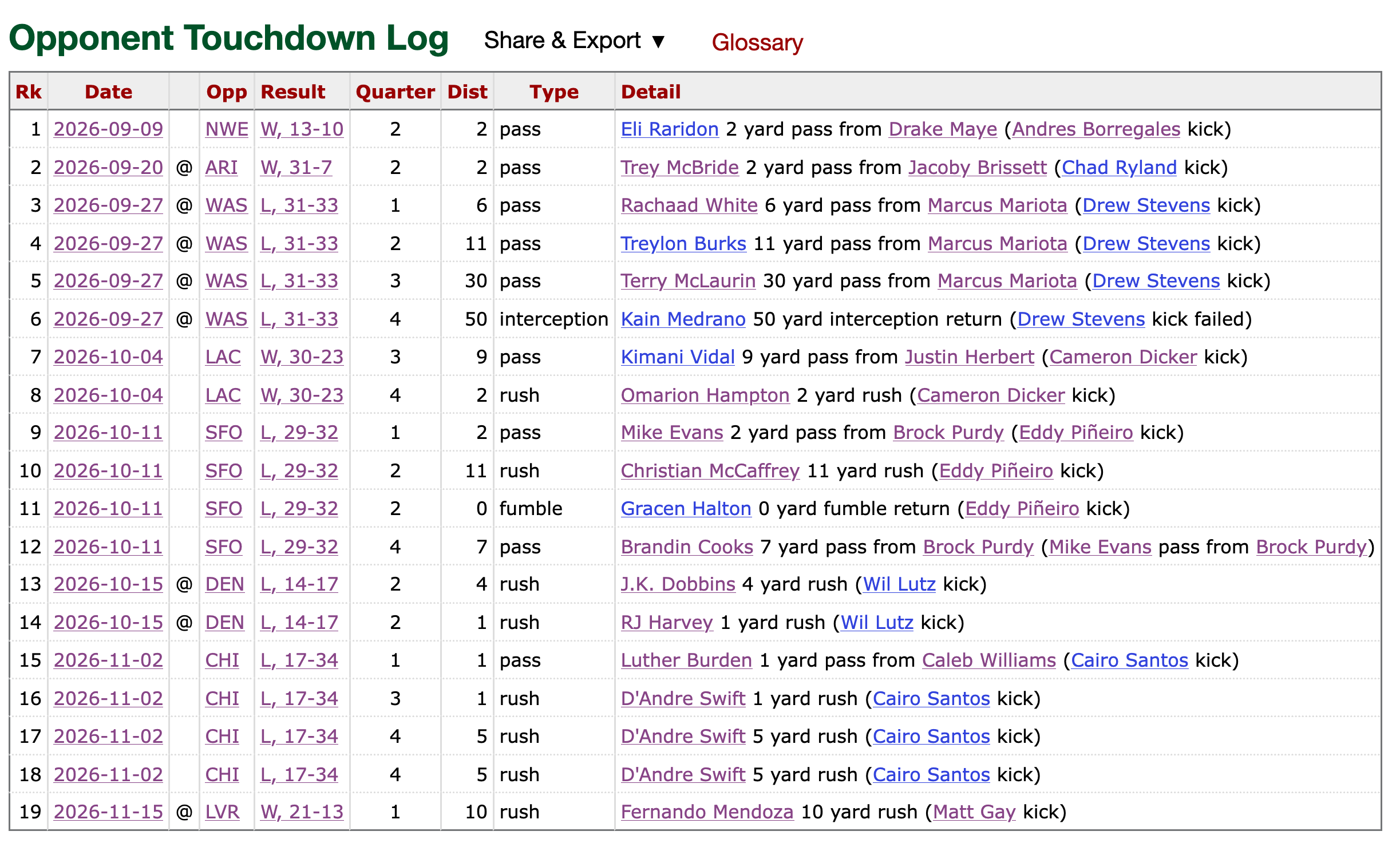
Now let’s review all 17 touchdown drives, only 11 of which (or 1.1 per game) actually started in the opponent’s territory. If Seattle’s offense was merely average in turnovers (instead of 26th) and didn’t have so many teams going for it on fourth down against them + didn’t get some questionable penalties called against their defense, the Seahawks would rank even better in points allowed. See for yourself:
Week 1 - Patriots
77-yard touchdown drive (2 yard pass to Eli Raridon)
3rd down: 3/3
Key play: 34-yard pass interference on Josh Jobe
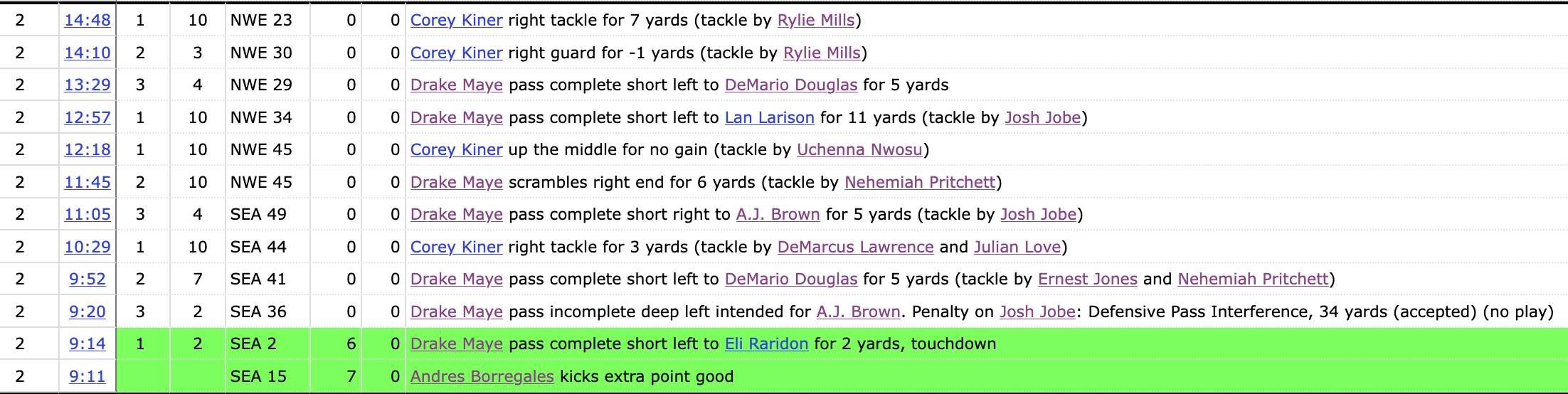
It’s third-and-2 from the 36, Patriots OC Josh McDaniels calls a flea flicker, which throws off Josh Jobe and from the looks of it New England benefits from an underthrown ball by Drake Maye.

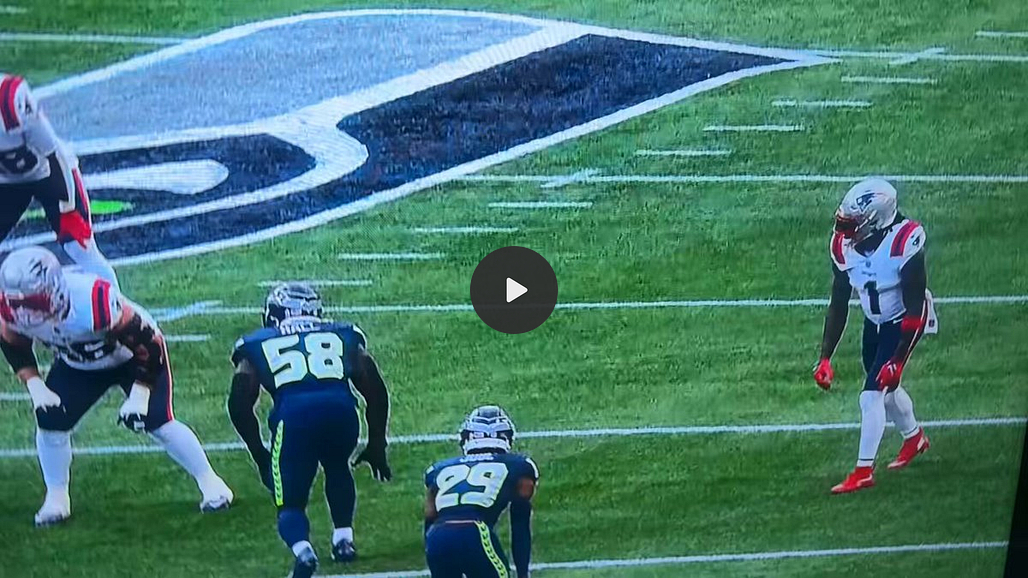
The Patriots had nine drives in the game and they punted five times, scored a touchdown, kicked a field goal, and Drake Maye was intercepted three times.
Week 2 - Cardinals
61-yard touchdown drive (2 yard pass to Trey McBride)
3rd down: 2/3
4th down: 1/1
Key Play: 8-yard pass interference on Rodney Thomas
Seattle’s second touchdown allowed of the season is a lot like their first: A third down is converted by pass interference and it ends on a two-yard touchdown pass to a tight end. That was fourth-and-Goal, so the Seahawks were one play away from allowing zero points.

The Cardinals had 10 drives, punted seven times, scored a touchdown, and were intercepted once.
Week 3 - Moons
21-yard touchdown drive (6 yard pass to Rachaad White)
Jadarian Price fumble sets up short field
The Seahawks allowed two touchdowns off of turnovers in their own territory.
60-yard touchdown drive (11 yard pass to Treylon Burks)
No third downs
This is a relatively easy drive for any offense against Seattle this season.
43-yard touchdown drive (30 yard pass to Terry McLaurin)
Sam Darnold intercepted at SEA 43

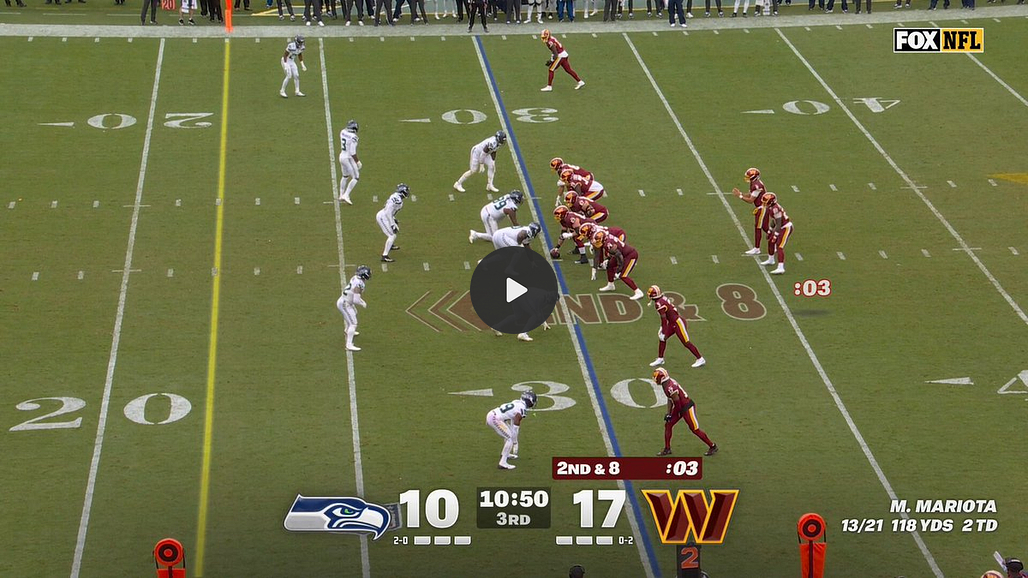
I think Marcus Mariota was a tougher matchup than Jayden Daniels would have been. The fourth touchdown allowed in this game was a pick-six.
Week 4 - Chargers
81-yard touchdown drive (9 yard TD pass to Kimani Vidal)
3rd down: 2/3
4th down: 1/1
Key Play: Facemask on Nick Emmanwori on third down
The Seahawks stop L.A. on third-and-4, but Emmanwori is called for a facemask. Seattle was called for 14 penalties in the game.

85-yard touchdown drive (2 yard TD run by Omarion Hampton)
3rd down: 4/4
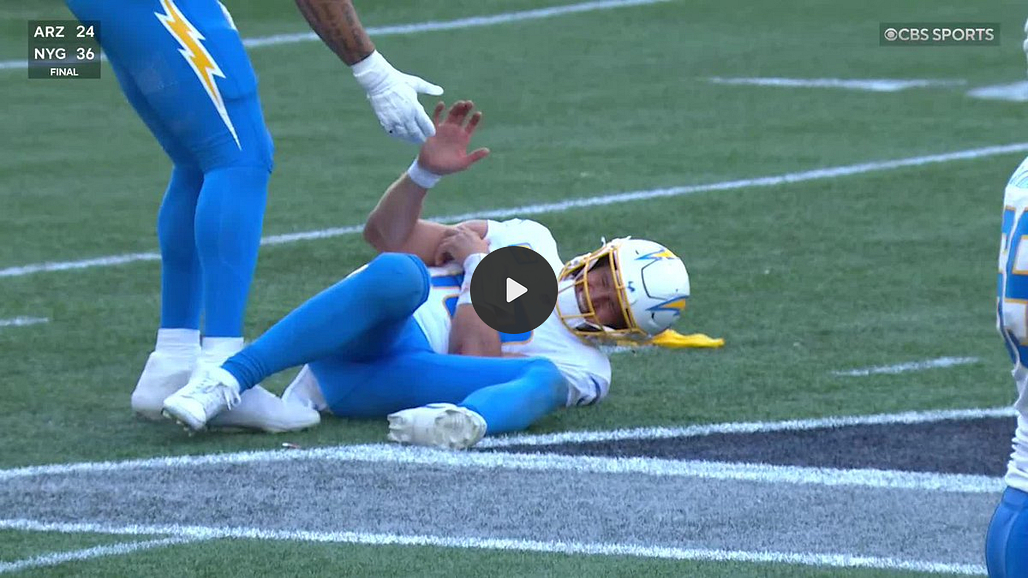
Key Play: Derick Hall roughing the passer on third-and-24
This is called roughing the passer:

Week 5 - 49ers
18-yard touchdown drive (2 yard pass to Mike Evans)
3rd down: 1/1
Key Play: Sam Darnold interception
Darnold’s early interception leads to a short field. Seattle still could have held them to a field goal if not a third-down completion to Evans.
11-yard touchdown drive (11 yard run by Christian McCaffrey)
Key Play: Emanuel Wilson fumble
The Seahawks OFFENSE is responsible for both touchdowns. It took the 49ers just 29 yards to score 14 points. Of course, just before the half, George Holani fumbles a ball in the end zone to give the 49ers 21 free points.