
The Seahawks were one half of the best rivalry in America’s most-watched sport last season, and if expectations are accurate, the intensity between Seattle and the Rams won’t fade in 2026. The L.A. Rams won the first battle, but the Seahawks won the war, culminating in a 31-27 victory in the NFC Championship and exposing Sean McVay’s greatest flaw as a head coach:
End-of-game and end-of-half management. Clock, timeouts, situational awareness. Game management to McVay is like kryptonite to Superman.
And if I learned anything from Seinfeld, it’s that there was a Bizarro Superman, which is a fitting title for Mike Macdonald: Bizarro McVay.
Often called “the McVay of defense”, Macdonald proved in Week 16 and the NFC Championship that he could also be the mirror image of McVay in game management skills, as Seattle out-strategized the Rams both times. For nine years, McVay has refused to give up play calling duties in L.A. and that’s probably the right decision. However, would he be smart enough to hand clock managmenet duties off to an assistant?
Only time will tell.
Last week, I recounted what happened in the first half of the Seahawks-Rams NFC Championship game and almost 100% of you said you wanted me to do the second half. These were a few key takeaways from that half.
Sean McVay’s clock management issues
In a way, the Rams’ offensive efficiency became their downfall. When what they needed was a 50 or 60-yard strike to Puka Nacua, the Rams instead chip away on a drive that started on their own 10-yard line and ended on an incomplete pass in the end zone defended by Devon Witherspoon.
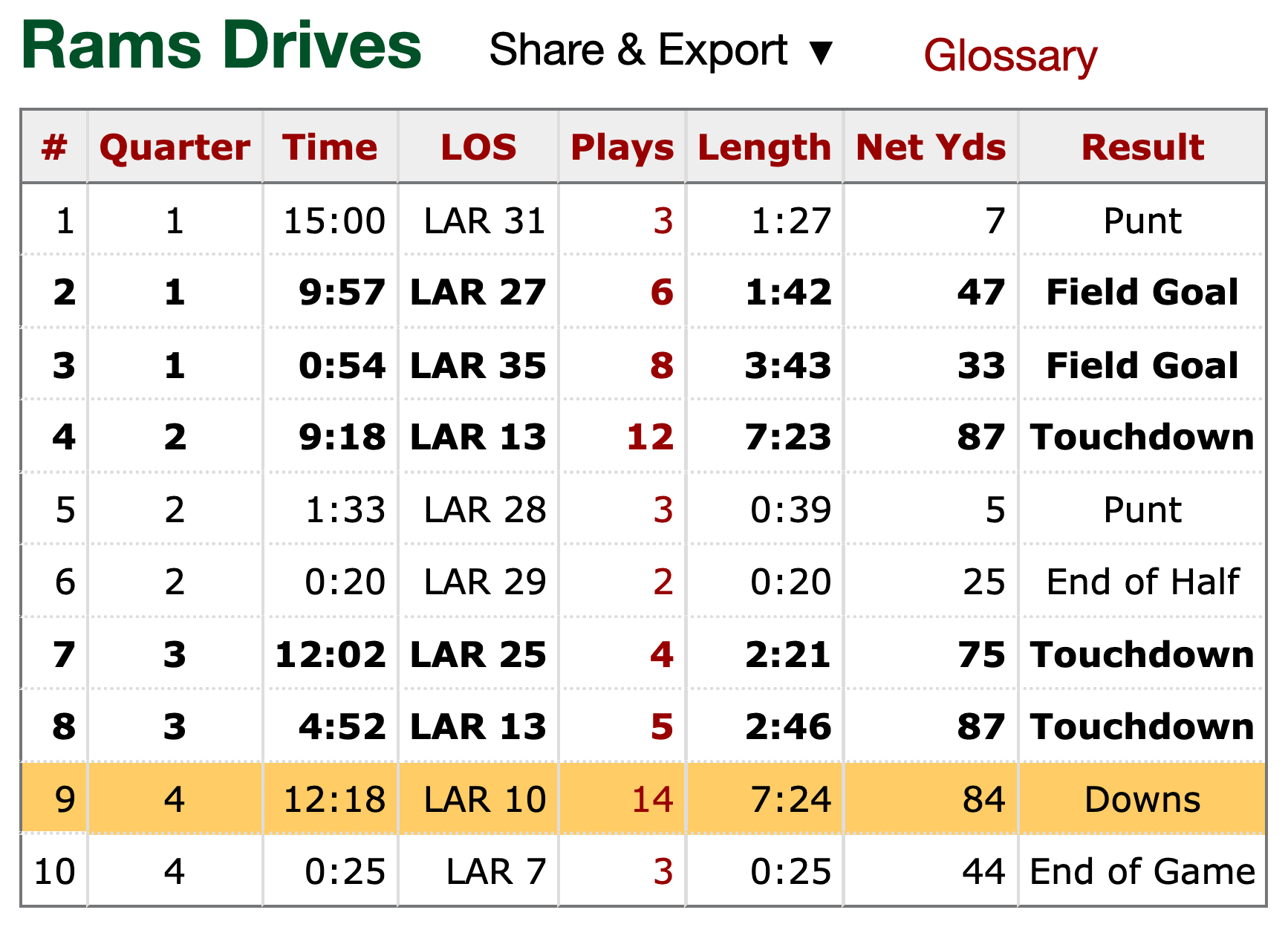
Although there was still 5 minutes on the clock and L.A. had all three timeouts left, Seattle is lucky there wasn’t 6 minutes left on the clock when they forced a turnover on downs. It all traces back to McVay’s long history of questionable clock and end-game management.
Even two months later, McVay was still holding onto the mistakes he made against the Seahawks except here he’s talking about the end of the first half:
““I try not to dwell on stuff that really doesn’t move me forward,” McVay said. “Now, what I do dwell on is that NFC Championship Game. One thing you don’t do in a two-minute situation, don’t put the defense back out on the field. We run it on a first-and-10, and then you know what? Should have run it again. They got three timeouts, we end up throwing it, it goes incomplete, then we go incomplete on third down, give them three downs, they go score a touchdown. Changes the momentum of that going into the half. So, what I do evaluate are some of those after-action reviews on situationally.””
McVay doesn’t have regrets about going for it on fourth-and-four in the fourth quarter, but does wish he had “handled some things differently game management-wise.” McVay was also criticized for clock management in a wild card loss to the Lions two years ago and the Rams also choked away an opportunity to beat the Eagles in the divisional round last season.
And that’s where I go back to burning 7:19 of game clock on a fourth quarter drive that ended in zero points.
The Rams started the drive with three straight first downs (11 yards, 15 yards, 13 yards) and then another two plays later (16 yards), moving all the way from the 10 to Seattle’s 35! Which is great in theory, but they’re also melting off :40 seconds with every completion and run.
There was no urgency, no getting out of bounds, no increase in tempo.
This was arguably a mistake by Sean McVay even if the Rams eventually scored a touchdown at the end of the drive, in which case they’re giving Seattle the ball back with 4:59 left, down three points, at home, and knowing that their mission is to score on the last play of regulation.
The Rams Managed the Clock Like They Were Ahead
Amazingly, McVay was on the verge of making the same strategic mistake against Seattle twice in six weeks::
In the Thursday night thriller that Seattle won to move into first place, McVay should have gone for two points in overtime before giving the ball back to the Seahawks. It was the smarter play strategically knowing that the rules and the stakes all but guaranteed Seattle would go for two if they scored a touchdown and it wasn’t the only time in the game he made that mistake:
“The Rams became the first team in history to give up three successful two-point conversions in the fourth quarter and overtime, but it may have been McVay’s indecision to kick extra points that cost his team the win. When Matthew Stafford threw a 1-yard touchdown to Nacua early in the fourth quarter to extend the lead to 29-14, I wondered to myself, “Why wouldn’t you go for 2 here?”
Everything other than a converted two-pointer has the same outcome: They were all two-possession game outcomes. It would either be 30-14 or 29-14. With teams working on their two-point plays so much more often than they did in the past, it makes little difference to be up 15 or 16.
But if the Rams went for two there and converted, then all of a sudden it becomes a three-possession game. The Rams should have gone for two and tried to make it a 17-point lead, meaning that even when the Seahawks scored two touchdowns in two minutes, L.A. would have still been ahead. And that’s not the only time that McVay should have gone for two before Seattle did.”
In overtime, McVay should have gone for two before kicking it back to Seattle and giving them a clear objective to score 8 points to win. There was almost no downside to L.A. going for two and enormous upside if they converted, especially with both defenses exhausted at that point. Both defenses were tired, and I guarantee that more teams will be going for two points in overtime next season.
McVay’s Biggest Weakness
McVay’s reputation as an offensive mastermind is sometimes undercut by his shortcomings as a strategist and game manager.
There was even an opportunity for the Rams to kick a field goal with 8:16 left that would have cut the lead to 31-30 and having all three timeouts. If the Rams get a stop, they can now take the lead with another field goal. And even if they give up a touchdown, it’s only a one-possession game (Seattle’s not going for two in that situation).
Instead, McVay goes for it and miraculously Stafford scrambled for a first down. It’s a moment of celebration for the Rams, but with the benefit of the hindsight this conversion plays into L.A.’s downfall.
Still showing no urgency, the Rams burn three more minutes and get zero points. And even though they force the Seahawks to punt, there’s no more time left than a desperation effort—and even with that they got to midfield. Had McVay conserved another minute, who knows what happens. But his running list of late game mistakes grows faster than his coaching tree and that’s something Seattle will remember when they meet again in December.
Which matters more in today’s NFL: play design or game management?
Score Bobo
For all intents and purposes, it was a disappointing season for Jake Bobo and the hopes he had for establishing himself as a vital piece of Seattle’s offense. He had a career-low 117 snaps, 2 catches for 20 yards, and was pushed even further down the depth chart.
Yet maybe this was just the setup that Klint Kubiak needed to deploy Bobo as a secret weapon for arguably the most important offensive play of the game:
“Middle-Eight” Strikes Again
Bobo’s touchdown catch on the first play after Seattle recovered a muffed punt return gave the Seahawks an 11-point lead and put L.A. in panic mode. Remember, with less than a minute left in the first half, Seattle trailed by 3. And only three minutes into the second half, the Seahawks led by 11.
That’s a “middle-eight” score of 14-7, Seattle. The Seahawks essentially had back-to-back touchdown drives without having to defend the Rams. That’s why “middle-eight” is considered important…by some.
Bobo offers offensive versatility, run-blocking value, special teams experience, and locker room leadership. Given his reputation from college to the NFL as a leader-by-example in practice, “leadership” feels like more than an intangible. Here’s what then-UCLA coach Chip Kelly said about him:
“Jake has been outstanding,” Kelly said. “He’s really pushed himself to wide receiver (No. 1) right now. I talked to (Duke coach) David Cutcliffe extensively about him and when he said this statement to me, that the three best practice players he’d ever coached were Peyton Manning, Noah Fant and Jake Bobo, we knew he was the type of kid we wanted.
Though Sam Darnold only targeted him twice in the regular season, the Seahawks eventually rewarded Bobo’s efforts by giving him this chance to break the NFC Championship game wide open.